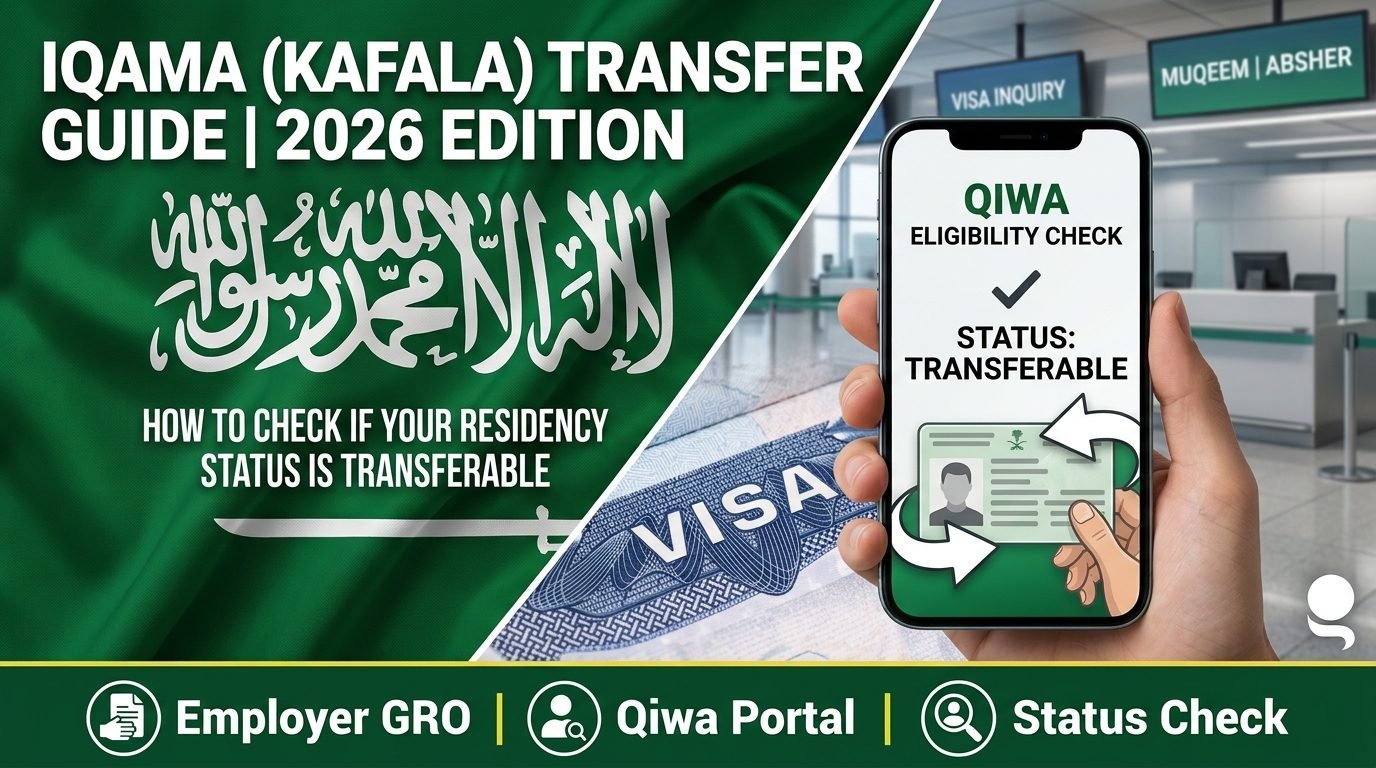
Quick answer: Your Iqama can generally be transferred if you hold a valid Iqama, have a job offer from a registered employer, and meet the transfer conditions, such as completing one year of service or reaching the end of your contract. The new employer starts the transfer by sending you a job offer on the Qiwa platform. To confirm your own status, check Qiwa or ask your employer’s government relations office.
What Is a Transferable Iqama (Kafala)?

The Iqama is the residency permit that lets foreign workers live and work legally in Saudi Arabia. A transferable Iqama means you can move your sponsorship from one employer to another while staying in the country. This is often called Naqal Kafala, or sponsorship transfer. It gives you the flexibility to change jobs without leaving Saudi Arabia.
Why Transferability Matters for Pakistani Workers
If you plan to switch jobs, knowing your transfer position in advance saves time and avoids legal trouble. A transfer done the right way keeps your residency valid and your new employer responsible for your Iqama.
Can an Employee Transfer Sponsorship?
Your ability to transfer depends on your work contract and on current Saudi labour rules. Below are the points most workers need to know.
The One-Year Rule
In most cases, you can transfer without your current employer’s approval once your contract has ended or you have completed at least one year of service. Before that, a transfer normally needs your current employer’s consent.
When You May Be Able to Transfer Without Employer Approval
Situations that commonly allow a transfer without your employer’s approval include:
- Your contract has ended or been terminated.
- You have completed the required period of service.
- Your wages have been unpaid for several months.
- Your employer failed to renew your Iqama or work permit.
- Your employer’s business has closed or is classed as non-compliant.
Rules and conditions change, so confirm which ones apply to you before you rely on any of them.
How to Check If Your Iqama Is Transferable
Step 1: Review Your Work Contract
Check your contract for any clause about transfer, notice periods or release. Keep a copy of the signed contract.
Step 2: Check Your Eligibility Conditions
Make sure you have a valid Iqama and work permit, no open labour dispute, and a job offer from a registered employer.
Step 3: Check Your Status on Qiwa
Sponsorship transfers are now handled through the Qiwa platform. Log in with your details, and check whether a job offer or transfer request exists under your Iqama number. The old ministry page that used the option for transfer of expatriate worker services may no longer match the current process, so use Qiwa and confirm on the live site.
Step 4: Confirm With Your Employer’s Government Relations Office
Your employer’s government relations officer (GRO) can tell you your Iqama status, remaining validity and whether any issue could block a transfer.
How the Iqama Transfer Process Works
- The new employer creates a job offer for you on Qiwa, using your Iqama number and contract terms.
- You review the offer and accept it within the allowed time. Acceptance makes the contract binding.
- Qiwa notifies your current employer, who has a set time to respond.
- A notice period applies in many cases. It is commonly reported as 60 to 90 days, and the two employers can agree to shorten it. Confirm the current period on Qiwa.
- The new employer pays the transfer fees and the Iqama is updated, usually within a few working days.
If you reject the offer, the request is cancelled. In most cases the new employer, not the worker, pays the transfer fees. Be cautious if anyone asks you to pay.
How to Make Your Iqama Transferable
- Keep an open, respectful relationship with your employer, because many transfers go more smoothly when both sides agree.
- Ask your company’s GRO or higher management to help with the paperwork.
- Make sure your Iqama and work permit are valid before you start.
- Clear any pending dues or disputes first.
- Keep your contract, salary records and Iqama copy ready.
Exceptions to Iqama Transferability
Some job categories follow separate rules and may not be able to transfer in the same way as private-sector workers. Domestic workers and some agricultural or household roles are common examples. If you work in one of these roles, check the specific rules before accepting a new offer so it fits your long-term plans.
What to Do If Your Employer Refuses to Transfer Your Sponsorship
First, discuss the matter openly and ask for the reason. Then check whether you meet the conditions for transfer without approval, such as contract end or unpaid wages. If the problem continues, you can file a complaint through the Ministry of Human Resources and Social Development’s labour dispute service. Unresolved cases can go to the labour court. Keep your contract, salary proof and any messages as evidence.
Tips for Pakistani Workers Planning a Transfer
- Accept a job offer only if you can see it on Qiwa under your Iqama number.
- Never pay an agent or employer for a “free” transfer without a receipt and written terms.
- Keep screenshots of your offer, acceptance and transfer status.
- Avoid leaving your employer without notice, because an absconding report can complicate your transfer.
- Before using any recruitment agency, verify its licence with Pakistan’s Bureau of Emigration and Overseas Employment (BE&OE).
Need Help Finding a New Job in Saudi Arabia?
GulfJobHire connects experienced Pakistani workers with verified employers across Saudi Arabia and the Gulf, in oil and gas, construction, healthcare, engineering, hospitality, facility management, security and logistics. We can also guide you on sponsorship transfer and Iqama questions. Contact GulfJobHire: [add your contact link or number]
Frequently Asked Questions About Iqama Transfer in Saudi Arabia
What is an Iqama (kafala) and why is it important?
An Iqama is the residency permit issued to foreign workers in Saudi Arabia. It lets you live and work legally and is needed for services such as healthcare and banking.
Can I transfer my Iqama during my first year of work?
In most cases, no. A transfer in the first year normally needs your current employer’s approval. Exceptions can apply, for example if your employer fails to renew your Iqama or work permit.
How can I check if my Iqama is transferable?
Check your work contract, confirm your Iqama and work permit are valid, and look for any job offer or transfer request on Qiwa under your Iqama number. You can also ask your employer’s government relations office.
Which platform handles Iqama transfers in 2026?
Sponsorship transfers are processed through the Qiwa platform. The Iqama record is then updated through the government’s residency services.
Who pays the Iqama transfer fee?
In most cases the new employer pays the transfer fees, not the worker. Confirm this in writing before you accept an offer.
What should I do if my employer refuses to transfer my sponsorship?
Discuss it openly first, then check whether you qualify to transfer without approval. If it is still unresolved, file a complaint through the Ministry of Human Resources and Social Development’s labour dispute service, and keep your documents as evidence.
Can domestic workers transfer their Iqama?
Domestic workers and some other categories follow separate rules. Check the specific conditions for your role before accepting any new offer.