
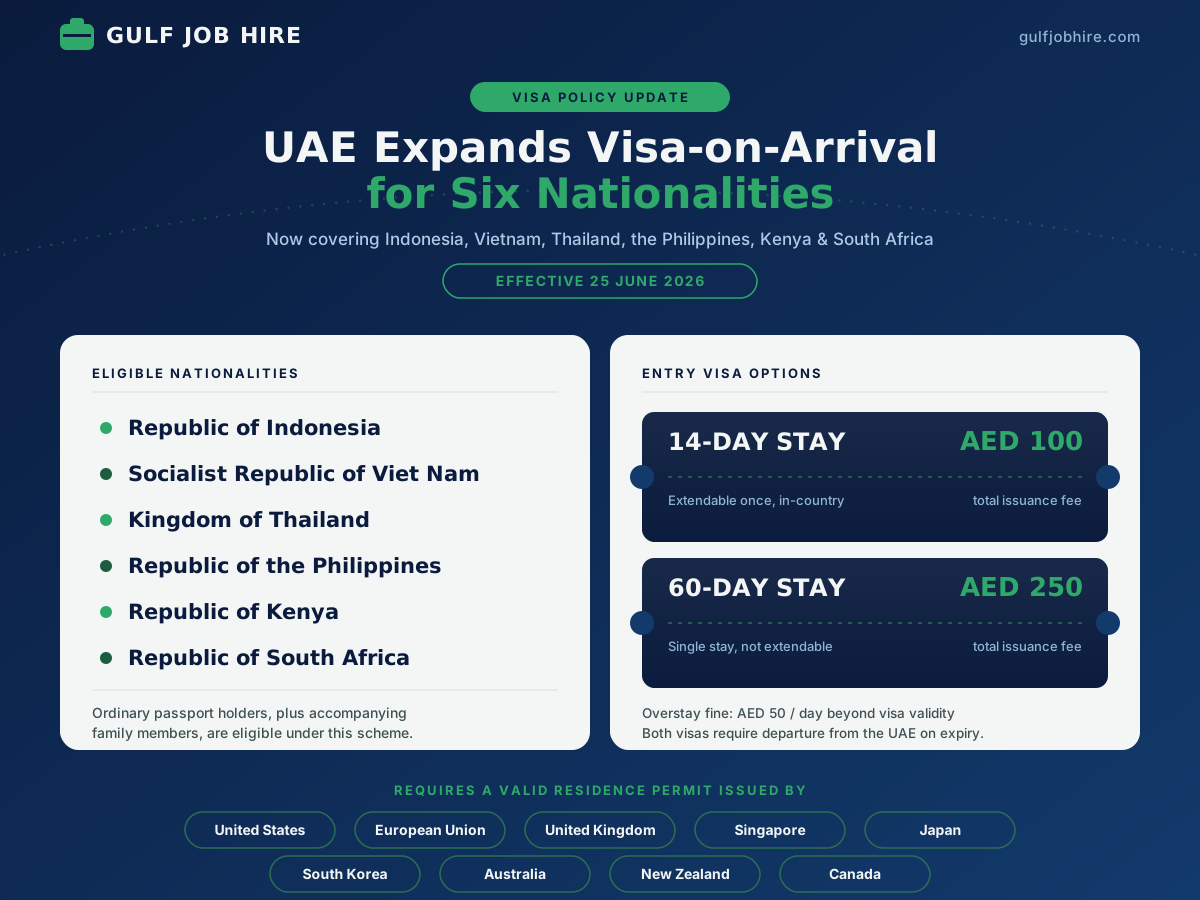
The United Arab Emirates has once again strengthened its reputation as one of the world’s most accessible travel and business destinations. In a major policy update, the UAE government has expanded its visa-on-arrival program to include nationals from six additional countries, opening the door for millions of travelers, professionals, and job seekers to visit or transit through the Emirates with far greater ease.
For readers of Gulf Job Hire, this update carries added significance. Whether you’re an HR professional tracking mobility trends, a job seeker eyeing the UAE as your next career destination, or simply someone planning a business trip to Dubai or Abu Dhabi, this expansion could directly affect how easily you can enter the country going forward.
Let’s break down exactly what’s changed, who qualifies, and what it means for you.
What’s New: Six Countries Added to the Visa-on-Arrival List

Under the newly announced decision, ordinary passport holders from the following six nations are now eligible for visa-on-arrival status in the UAE:
- Republic of Indonesia
- Socialist Republic of Vietnam
- Kingdom of Thailand
- Republic of the Philippines
- Republic of Kenya
- Republic of South Africa
This is a notable expansion because it brings together nations from Southeast Asia and Africa — two regions that supply a significant share of the UAE’s expatriate workforce, tourism traffic, and business travelers. The move signals the UAE’s intent to deepen ties with these countries not just diplomatically, but economically and culturally as well.
Importantly, the visa-on-arrival benefit doesn’t stop with the passport holder alone — accompanying family members of eligible nationals are also covered under the same scheme, making this a family-friendly update as much as an individual one.
The Catch: A Valid Residence Permit From an Approved Country Is Required
This isn’t a blanket visa-free arrangement. There’s a specific condition attached, and it’s an important one to understand before you start planning your trip.
To qualify for the UAE’s visa-on-arrival under this new scheme, applicants (and any accompanying family members) must hold a valid residence permit issued by one of the following countries or regions:
- The United States
- A European Union member state
- The United Kingdom
- The Republic of Singapore
- Japan
- The Republic of Korea
- Australia
- New Zealand
- Canada
In other words, this expansion is designed for nationals of Indonesia, Vietnam, Thailand, the Philippines, Kenya, or South Africa who are already living, working, or studying abroad in one of these nine approved destinations. If you’re a citizen of one of the six newly added countries but don’t currently hold residency in one of these nine places, you would still need to apply for a UAE visa through the standard channels rather than relying on the visa-on-arrival option.
This structure mirrors similar policies used by other countries, where holding a residence permit from a “trusted” third country is treated as a form of pre-vetting — reducing risk while still opening the door wider for global mobility.
Two Visa Options: 14 Days or 60 Days
Once you meet the eligibility criteria, you have a choice between two visa-on-arrival durations, depending on your travel purpose and how long you intend to stay in the UAE.
The 14-Day Visa
This shorter-stay option is well suited to quick business trips, short vacations, family visits, or initial exploratory visits — for example, if you’re considering a move to the UAE and want to scope out job opportunities, housing, or the general lifestyle before committing further.
A key advantage of the 14-day visa is that it can be extended once while you are physically present in the UAE, effectively allowing you to double your stay if needed without having to leave the country and re-enter.
The 60-Day Visa
The 60-day option is designed for those who need a longer window in the country — perhaps for extended business dealings, a longer vacation, or more thorough job-hunting and networking before deciding on relocation. Unlike the 14-day visa, however, this is issued for a single stay only and cannot be extended. Once your 60 days are up, you’ll need to leave the UAE; there’s no option to prolong your visit under this particular visa category.
This distinction matters a lot for planning purposes. If there’s any chance your trip could run long and flexibility is a priority, the 14-day visa (with its extension option) may actually offer more practical breathing room than committing to the fixed 60-day term.
What Happens If You Overstay?
The UAE has become known in recent years for progressively easing its visa and residency rules, but it still enforces strict rules around overstaying. Once either visa — the 14-day or the 60-day — expires, visa holders are required to leave the country.
If you remain in the UAE beyond your permitted period, an overstay fine of AED 50 per day applies. This is a per-day charge that accumulates the longer you stay past your visa’s expiry, so it’s well worth marking your exit date clearly and building in a buffer for travel logistics, especially if you’re booking onward flights or connections.
For anyone using this visa as a stepping stone toward exploring job opportunities in the UAE, this is a critical detail to keep in mind. Overstaying — even accidentally — can complicate future visa applications and travel to the UAE, so it’s best to plan your departure or renewal well ahead of the deadline.
How Much Does It Cost?
One of the more traveler-friendly aspects of this update is the pricing structure, which remains relatively affordable compared to many other visa-on-arrival or e-visa schemes around the world:
- 14-day visa: Total issuance fee of AED 100
- 60-day visa: Total issuance fee of AED 250
These fees cover the total cost of issuance, making budgeting for your trip straightforward. Given the relatively low cost, especially for the 14-day option, this scheme presents a low-barrier way for eligible travelers to experience the UAE firsthand.
Why Is the UAE Doing This?
According to the UAE’s Ministry of Foreign Affairs, this expansion is about far more than tourism numbers. The Ministry has framed the decision as part of a broader strategy to strengthen bilateral relations with partner nations and to deepen economic, cultural, and people-to-people connections between the UAE and these six countries.
Beyond diplomacy, there’s a clear economic and talent-focused rationale as well. By making it easier for skilled professionals, entrepreneurs, and tourists from Indonesia, Vietnam, Thailand, the Philippines, Kenya, and South Africa to visit, the UAE is positioning itself to attract:
- Business travelers and investors exploring opportunities in the UAE’s dynamic economy
- Entrepreneurs looking to tap into the country’s business-friendly environment
- Tourists interested in experiencing the UAE’s culture, hospitality, and world-class attractions
- Skilled talent who may be evaluating the UAE as a long-term relocation destination
The Federal Authority for Identity, Citizenship, Customs and Ports Security (ICP), which administers the country’s visa framework, echoed this sentiment. The Authority described the move as part of its continuous effort to modernize the UAE’s visa system, broaden the pool of eligible travelers, and align its offerings with international best practices in travel and mobility. It also noted that expanding this kind of access helps reinforce the UAE’s standing in global rankings related to residency, tourism, and ease of travel — areas where the country has consistently pushed to be a top performer.
What This Means for Job Seekers and Professionals
For our readers specifically interested in Gulf employment opportunities, this update is worth paying close attention to. Historically, one of the biggest hurdles for job seekers from Southeast Asia and Africa exploring UAE opportunities has been the visa application process — often requiring sponsorship, lengthy paperwork, or in-country arrangements before even setting foot in the country.
With this new scheme, nationals of Indonesia, Vietnam, Thailand, the Philippines, Kenya, or South Africa who already hold residency in a major hub like the US, UK, EU, Singapore, Japan, South Korea, Australia, New Zealand, or Canada can now visit the UAE relatively easily to:
- Attend job interviews in person
- Network at industry events or job fairs
- Meet potential employers or business partners face-to-face
- Explore the local job market, cost of living, and lifestyle before making a relocation decision
- Finalize employment contracts or work visa arrangements in person
This kind of in-country access can be a meaningful advantage in competitive hiring processes, where employers often favor candidates who can meet in person, especially for senior or specialized roles.
Key Takeaways at a Glance
To summarize the essentials of this policy update:
- Six new countries added: Indonesia, Vietnam, Thailand, the Philippines, Kenya, and South Africa
- Eligibility condition: Applicants must hold a valid residence permit from the US, an EU member state, the UK, Singapore, Japan, South Korea, Australia, New Zealand, or Canada
- Family members: Accompanying family members of eligible nationals are also covered
- Visa options: 14-day (extendable once) or 60-day (single stay, non-extendable)
- Fees: AED 100 for the 14-day visa; AED 250 for the 60-day visa
- Overstay penalty: AED 50 per day beyond the visa’s validity
Frequently Asked Questions
1. Do I need to apply for this visa in advance, or is it truly issued on arrival? As the name suggests, this visa is issued when you arrive in the UAE, provided you meet the eligibility requirements — namely, being a national of one of the six listed countries and holding a valid residence permit from one of the nine approved countries or regions. It’s still wise to travel with proof of your residency status, your return or onward ticket, and any other standard entry documentation, since immigration officers will need to verify your eligibility at the point of entry.
2. Can I choose between the 14-day and 60-day visa, or is it assigned automatically? Based on how the policy has been described, travelers have the choice between the two visa types depending on their travel plans. If you know you’ll need more flexibility around extending your stay, the 14-day visa (which can be extended once) may suit you better. If you need a longer initial stay and are confident you won’t need to extend, the 60-day option could be more convenient, since it avoids the need for a separate extension application altogether.
3. What happens if my residence permit in the qualifying country expires while I’m still in the UAE? The eligibility requirement is generally tied to holding a valid permit at the time of application or entry. It’s advisable to ensure your residence permit remains valid throughout your intended stay in the UAE and to keep documentation on hand in case it’s requested during your visit or at any extension request.
4. Is this visa suitable for job hunting or attending interviews in the UAE? Yes — this is one of the more practical uses of the visa-on-arrival scheme for professionals. Since the visa doesn’t require a UAE-based sponsor to arrange your entry, it gives you the freedom to travel independently for interviews, networking events, or exploratory visits, before committing to a longer-term work visa or relocation process.
5. Can I convert this visa-on-arrival into a residence or work visa while in the UAE? Visa conversion rules in the UAE vary depending on the visa category and current immigration regulations. If you secure a job offer or sponsorship while in the country, you would typically need to follow the standard process for switching to a work or residence visa, which may involve your employer or sponsor initiating the necessary paperwork. It’s best to confirm the exact process with UAE immigration authorities or a licensed PRO (Public Relations Officer) service at the time.
6. Does this visa allow me to work in the UAE? No. A visa-on-arrival, whether for 14 or 60 days, is generally intended for tourism, business visits, or short-term stays — not for employment. If you intend to work in the UAE, you’ll need a separate work permit and residence visa arranged through an employer or sponsor, even if you initially entered the country on a visa-on-arrival.
7. Are children and other family members automatically covered under this scheme? Yes, accompanying family members of eligible nationals are included under the same visa-on-arrival provisions, provided they also meet the underlying eligibility criteria, including holding valid documentation as required. It’s a good idea to check the specific requirements for dependents before traveling as a family unit.
8. Where can I get the most accurate, up-to-date information before I travel? Because visa policies can be updated or refined over time, it’s always best to check directly with the UAE’s Federal Authority for Identity, Citizenship, Customs and Ports Security (ICP), a UAE embassy or consulate, or a licensed travel and visa service before finalizing your travel plans. This ensures you have the most current fee structure, eligibility rules, and documentation requirements at the time of your trip.
Final Thoughts
This latest expansion of the UAE’s visa-on-arrival program reflects the country’s ongoing push to remain one of the most connected, accessible, and globally competitive destinations for travel, business, and talent. By linking eligibility to residency in major global hubs, the UAE has found a way to broaden access responsibly while still maintaining a structured, secure entry framework.
For professionals from Indonesia, Vietnam, Thailand, the Philippines, Kenya, and South Africa currently based abroad, this is a timely opportunity to explore what the UAE has to offer — whether that’s a short business trip, a vacation, or the first step toward a new career in one of the world’s fastest-growing economies.
As always, before booking travel, it’s a good idea to confirm the latest requirements directly with UAE immigration authorities or a licensed visa service, since eligibility rules and fees can be updated over time.
Stay tuned to Gulf Job Hire for more updates on UAE visa policies, work permit changes, and career opportunities across the Gulf region.

Great content! Keep up the good work!